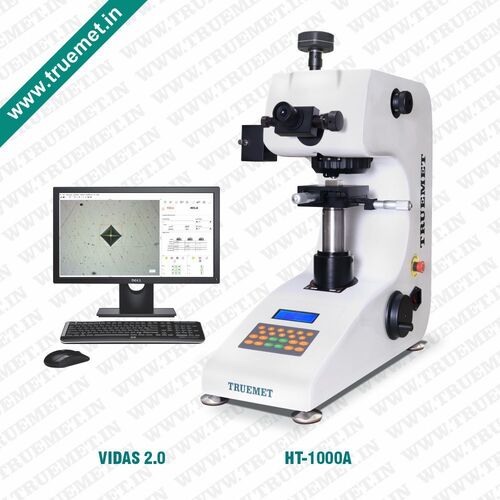
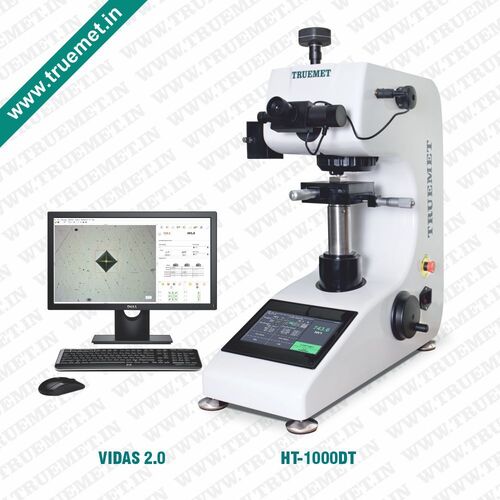
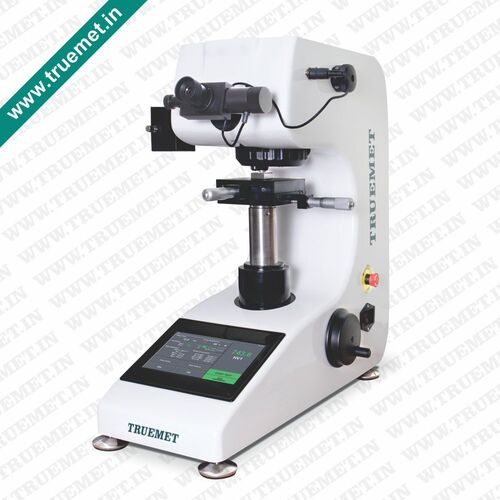
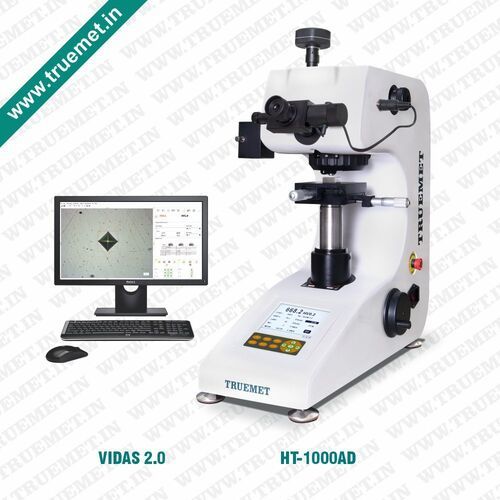
About Computerized Micro Vickers Hardness Tester (HT-1000A with VIDAS 2.0)
Features
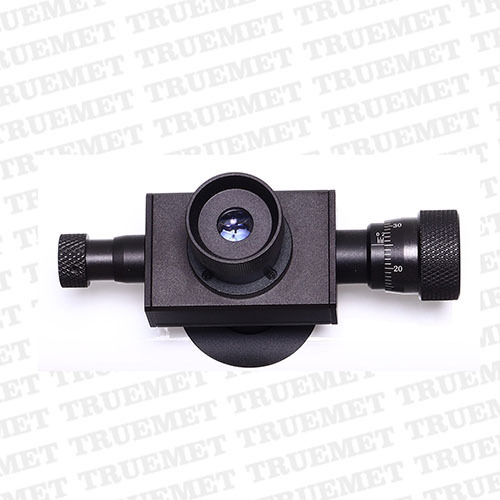
MANUAL EYEPIECE :Equipped with 10x Manual Eyepiece to measure the length of diagonal. The hardness value can be displayed directly on LCD screen by entering the indentation diagonal length.
CAMERA PORT :Machine equipped with dual optical channel. 5 MP USB Camera is connected to one of the dual optical channels, other optical channel is for 10X eyepiece. Both optical channel works simultaneously.
ILLUMINATION SYSTEM :Halogen illumination unit gives very clear images and can be also used as a simple microscope. Halogen illumination unit enter stand by mode after a certain period of inactivity which gives it a long service life and low power consumption.
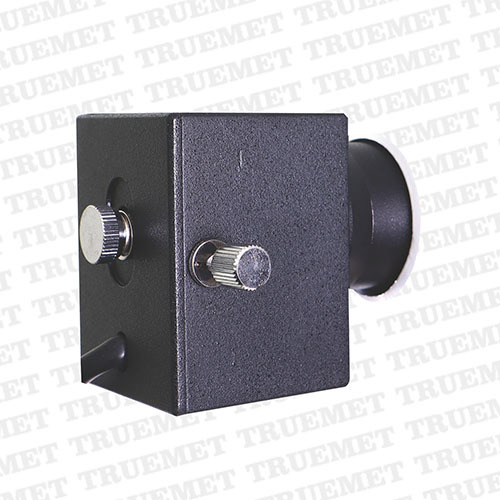
TEST FORCE : Wide range of test fore (10gm to 1000gm) can be selected with external force selection knob. The test force is automatically displayed on the LCD display.
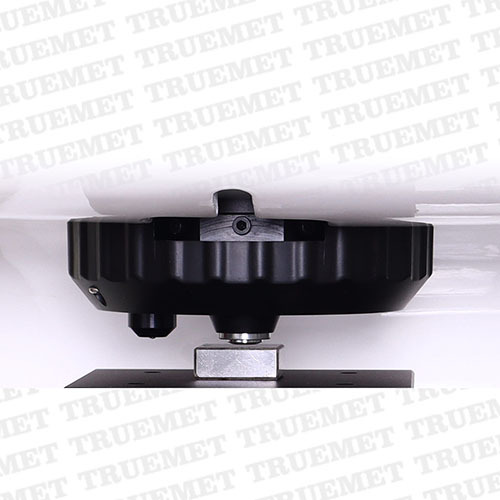
AUTO TURRET MECHANISM :Equipped with auto turret mechanism. Auto turret perform a series of operation and measuring lens automatically comes back to central position after making indentation. The position of the indenter and the objective lens can be automatically switched using keypad.
Z-AXIS LIFTING SYSTEM :Side-Ways lifting system makes the z-axis movement more stable and accurate.
LCD SCREEN :80X25mm LCD Screen can visually display the hardness value, conversion hardness, test force and dwell time.
EMERGENCY SWITCH :Equipped with emergency stop switch.
Advanced Optical Measurement TechnologyThe HT-1000A harnesses dual objective lenses and an automatic turret for rapid, precise focusing. Its integrated high-resolution digital camera and bright LED lighting assure clear indentation imaging. The system automatically measures indentations using sophisticated optical analysis, delivering consistent accuracy and minimizing operator error during micro-hardness testing.
User-Friendly Automation and SoftwareEquipped with fully motorized, computerized controls and the VIDAS 2.0 software suite, this tester automates load selection, turret switching, and measurement routines. The intuitive interface supports multiple languages and allows real-time data analysis, easy storage, and export of test results, significantly streamlining laboratory workflows.
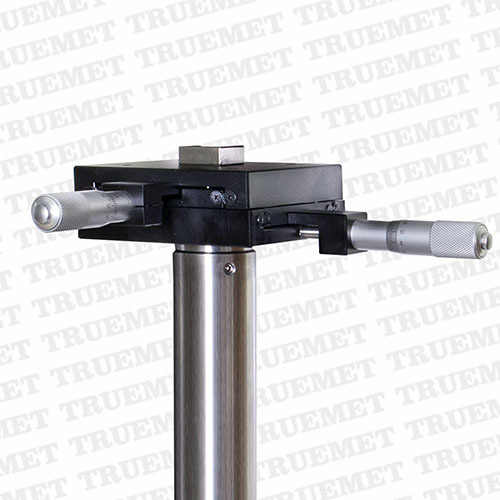
Versatile and Comprehensive PerformanceDesigned to accommodate specimens up to 95 mm wide and 100 mm high, the HT-1000A covers a measuring range of 1 HV to 2967 HV. It ensures measurement accuracy within 1.0% of full scale and provides rapid test readouts. Its benchtop design, robust construction, and USB/RS232 connectivity make it adaptable for a range of micro-hardness applications.
FAQs of Computerized Micro Vickers Hardness Tester (HT-1000A with VIDAS 2.0):
Q: How does the HT-1000A perform automated hardness measurements?
A: The HT-1000A uses advanced optics, a high-resolution camera, and VIDAS 2.0 software for fully automated indentation measurements. Simply place the specimen, set parameters via software, and the system motorizes the load application, switches objectives automatically, and records results with high accuracy.
Q: What benefits does VIDAS 2.0 software offer for data handling?
A: VIDAS 2.0 provides integrated storage, real-time analysis, and flexible data export. It streamlines workflows by allowing lab users to review, analyze, and archive results easily, and offers multi-language support for wider accessibility.
Q: Where can this hardness tester be effectively utilized?
A: This equipment is ideal for laboratory material analysis, especially in research, quality control, and educational institutions requiring precise micro-hardness measurements of metals, alloys, and micro-components.
Q: What are the maximum specimen dimensions and test force?
A: The HT-1000A accommodates specimens up to 95 mm wide and 100 mm high. It supports a maximum test force of 1000 gf, making it suitable for various sample types within the micro Vickers testing range.
Q: When should I use the dual objective (10x/40x) feature?
A: The dual objective lenses are automatically selected based on optimal viewing needs. Use 10x for wider field visualization and 40x for detailed examination of indentation, both auto-switched via the motorized turret for precision.
Q: How is specimen illumination achieved during testing?
A: A high-intensity LED provides uniform and bright illumination for clear imaging, ensuring accurate measurement of the Vickers indentations regardless of the samples reflectivity.
Q: What are the primary benefits of full automation in this device?
A: Full automation minimizes user intervention, reduces error, and increases repeatability. The system handles load selection, lens switching, measurement, and data logging, enhancing productivity and reliability in high-throughput testing environments.

 Send Inquiry



 Send Inquiry
 Send Inquiry