About Poldi Hardness Tester
FEATURES:
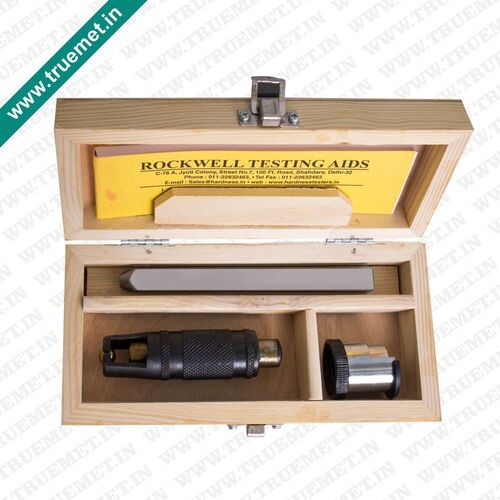
Poldi Hardness Tester is suitable for measuring the Brinell Hardness of Steel, Cast iron, Brass Aluminum, Copper etc. This Poldi Hardness Tester is useful to test parts where bench type model is not useful. This hammer type of machine is most ideal and simple for foundries, Workshops, Engineering Colleges, Technical Institutions etc.
PRINCIPLE
Load is applied by a hammer blow on the specimen and a standard test bar in linear direction through a hardened steel ball of 10 mm dia. The impact load on both is the same. The extent of indentation on the specimen and the test bar depends on their hardness. The two diameters of indentations on test bar and specimen are measured by a magnifier supplied along with the tester. The hardness of the specimen can be determined, by referring got the chart supplied with the machine.
TECHNICAL DATA:
Hardened Steel Ball:-
- 10 mm dia , fixed in a special holder
- with a spring loaded plunger.
Standard Test Bar:
- Each bar individually calibrated and Multiplying Factor marked thereon.
Magnifier:-
- Measuring range: 10 mm
- Scale graduation: 0.1 mm
- Magnification: 10x
- Accuracy of measurement: 0.05 mm
Hardness Tables:-
Comparison tables for finding hardness Separate Tables for Steel, Cast iron , Brass Copper and Aluminum.
Efficient Manual Hardness TestingDesigned for convenience and precision, the Poldi Hardness Tester uses hammer striking to manually determine the hardness of steel and alloy steel specimens. Its instant response and analog display ensure rapid readings, making it ideal for both on-site and laboratory use in industrial environments.
Highly Portable and Durable ConstructionBuilt from high-quality materials, with an alloy steel indenter and a sturdy blue finish, the tester can withstand demanding operating conditions. The supplied carrying case and compact design allow users to easily transport and operate the equipment wherever its needed, with no electrical power required.
Flexible Application for Steel IndustryWith a measuring range up to 70 HRC and suitable for specimens with a minimum thickness of 10 mm, the tester is perfect for quality control of steel rods, bars, and forgings. Manual operation accommodates various specimen sizes, supporting diverse testing requirements across manufacturing and processing sectors.
FAQs of Poldi Hardness Tester:
Q: How does the Poldi Hardness Tester (Hammer Type) work?
A: The tester determines the hardness of steel specimens by manually striking a standardized hammer on the indenter positioned over the test piece. The resulting indentation is compared using the included reading scale to provide an accurate hardness value up to 70 HRC.
Q: What types of materials can be tested with this device?
A: This hardness tester is specifically designed for steel and alloy steel specimens. It is suitable for rods, bars, and forgings with a minimum thickness of 10 mm, making it versatile for various industrial applications.
Q: When should I use the Poldi Hardness Tester?
A: You should use the tester whenever you need rapid, on-the-spot hardness evaluation of steel materials without needing electrical power, especially in settings such as workshops, factories, or field operations.
Q: Where can the Poldi Hardness Tester be operated?
A: The device can be used anywhere that meets its operational conditions, with recommended humidity not exceeding 85% RH and temperatures between 0C and 50C. Its portable nature allows for easy use in both indoor and outdoor environments.
Q: What is the testing process with this equipment?
A: Place the steel specimen of at least 10 mm thickness, position the indenter and test bar as instructed, and manually strike the hammer. Immediately after, compare the indentation with the reference scale to read the hardness value.
Q: What are the benefits of using this hardness tester?
A: Key benefits include portability, reliable accuracy (1 HRC), quick results after hammer impact, no need for an external power supply, and ease of use for a variety of steel and alloy steel specimen sizes.
Q: Is the Poldi Hardness Tester suitable for automated testing?
A: No, this device is designed for manual operation only. Users perform all testing actions manually, which allows for practical and straightforward application without the need for complex setups or power sources.

 Send Inquiry


 Send Inquiry
 Send Inquiry