
Call: 07971891537( PIN:797)
 Send Inquiry
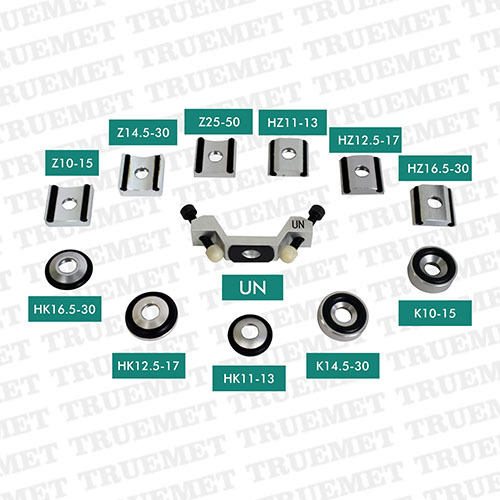
Permanently assembled and installed parts.
large and heavy components in forging, tool room, foundries & Heat Treatment units.
measurement of hardness in confined spaces.
Material identification of metallic material.
surface hardened components.
Features
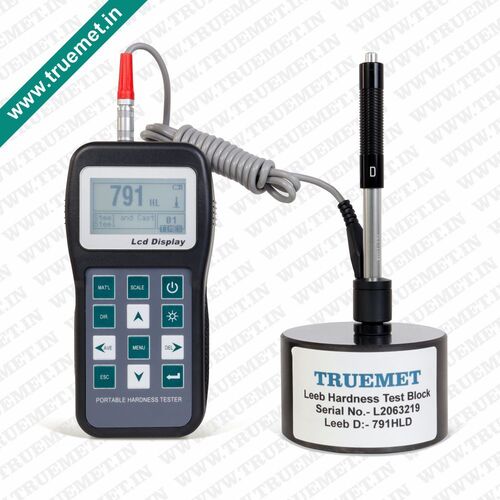
Large LCD Display(128X64 dot matrix) showing hardness value, Direction of impact device, hardness scale, material, test Time for average and battary icon
Direct Display of hardness in HV, HB, HRC, HRB, HRA and HS Scales.
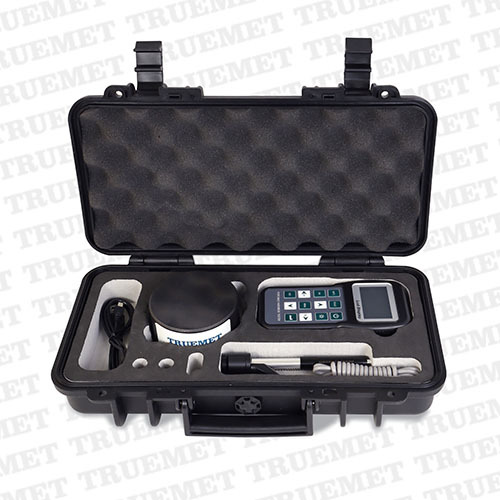
7 types of impact devices can be attached for special application and need not to be recalibrated when changing them.
the machine identify the type of impact device automatically
Upto 600 groups (impact times:32 1) of data can be stored in internal memory of the machine.
Upper and lower limit of hardness can be preset. when the tested value exceeds the limits, alarm buzz automatically
Back light on/off facility is given by pressing key to make machine converient for use in poor light.
User Calibration function.
By Using Software, data can be transfered and saved in pc for future use.
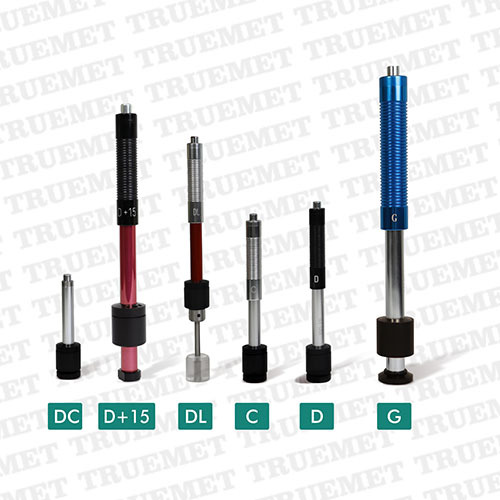
Different types of impact devices and there uses
Impact Device D :Universal Standard Impact device use for testing majority of metallic components
Impact device DL:Testing of slender, narrow groove and extermely confirmed spaces.
Impact Device DC:Extremely short impact device for very confirmed space such as holes, cylinders etc.
Impact Device DL+15 :Slim front section with coil set back used in grooves, recessed surface like T-Slot
Impact Device C :Low impact energy device used for testing case hardened, coating and thin walledcomponents.
Impact Device G :Suitable on heavy components such as rough casting and forgings in brinell scale only.
Impact Device E :Suitable for testing super high hardness material.
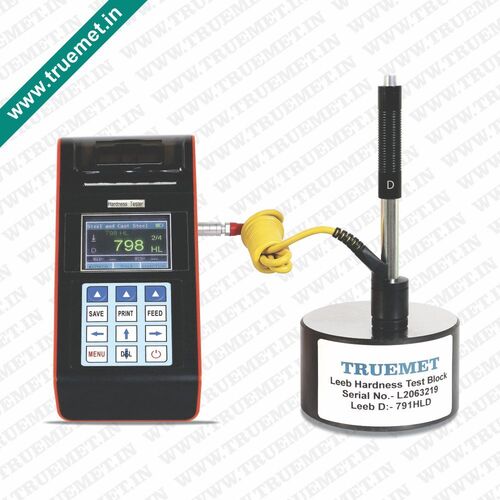
Price 1 INR / Number
Minimum Order Quantity : 1 Number
Application : Metal hardness testing
Machine Weight : 0.6 Kilograms (kg)
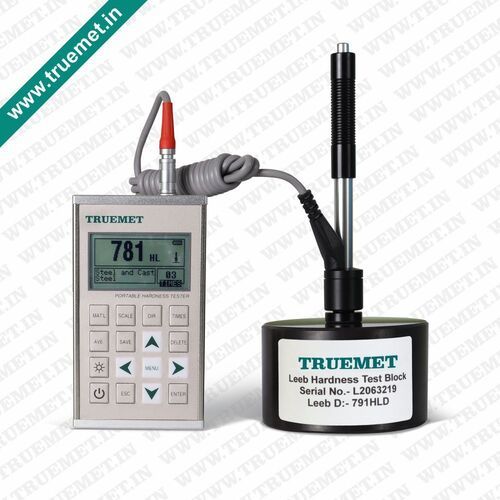
Price 1 INR / Number
Minimum Order Quantity : 1 Number
Application : Hardness testing of metals
Machine Weight : 350 Gram (g)
Test Stroke : 26 mm
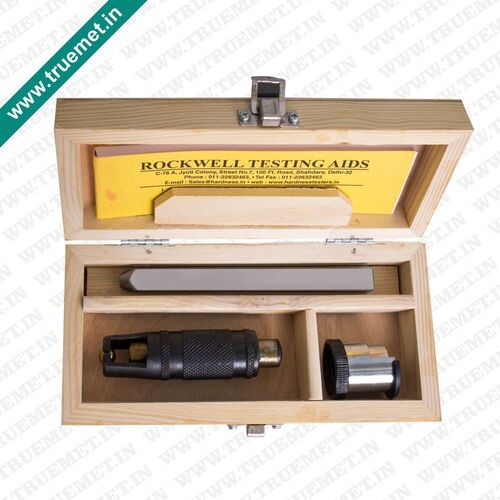
Price Range 2800.00 - 3600.00 INR
Minimum Order Quantity : 1 Box
Application : Industrial
Machine Weight : 535 Kilograms (kg)
Test Stroke : Depends on specimen and hammer action
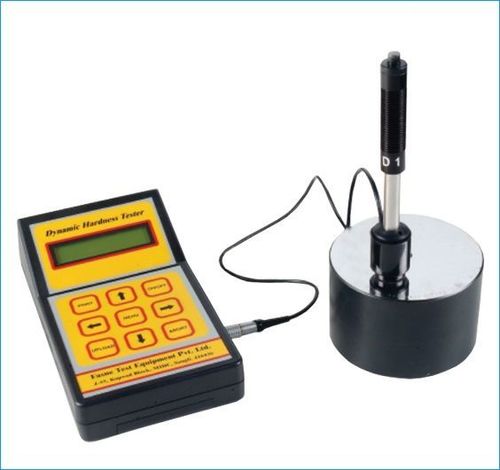
Price Range 25000.00 - 150000.00 INR
Minimum Order Quantity : 1 , , Unit
Application : Industrial
Machine Weight : 0.2300.500 Kilograms (kg)
GST : 07AHQPK4683C1Z4


 Send Inquiry
 Send Inquiry